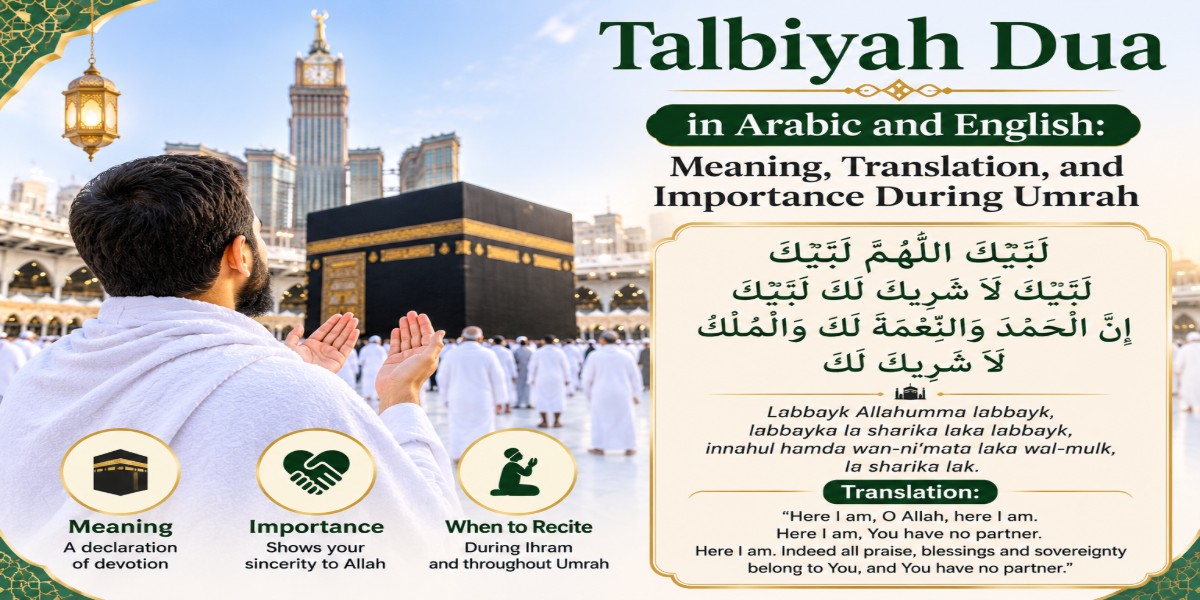
The journey of Umrah is a special opportunity for Muslims to strengthen their connection with Allah, seek forgiveness, and renew their faith. One of the most significant parts of this spiritual journey is reciting the Talbiyah, a beautiful supplication that expresses a pilgrim’s response to Allah’s invitation. Recite it when entering the state of Ihram, and continue throughout the journey until the pilgrim begins the Tawaf.
For Muslims preparing for Umrah, learning the Talbiyah in Arabic, understanding its English translation, and knowing when to recite it can make the pilgrimage more meaningful. Whether you are traveling for the first time or returning to the holy cities, understanding this supplication helps you appreciate the spiritual significance of every step.
What Is Talbiyah Dua?
Talbiyah is a special Islamic supplication recited by Muslims after entering the state of Ihram for Hajj or Umrah. It represents a pilgrim’s response to Allah’s call and expresses complete submission, devotion, and willingness to worship Him.
The words of Talbiyah remind Muslims that Allah is One, has no partner, and deserves all praise and worship. It is also a declaration that every blessing, authority, and sovereignty belong to Him.
During Umrah, pilgrims recite Talbiyah while traveling towards Makkah. Hearing thousands of Muslims reciting the same words creates a powerful spiritual atmosphere and reminds everyone that they are united through their faith.
Talbiyah Dua in Arabic
The Talbiyah is traditionally recited in Arabic. Muslims should try to learn its pronunciation and understand its meaning before beginning their pilgrimage.
Arabic:
لَبَّيْكَ اللَّهُمَّ لَبَّيْكَ، لَبَّيْكَ لَا شَرِيكَ لَكَ لَبَّيْكَ، إِنَّ الْحَمْدَ وَالنِّعْمَةَ لَكَ وَالْمُلْكَ، لَا شَرِيكَ لَكَ
Talbiyah Dua in English Transliteration
For those who are not familiar with reading Arabic, the following transliteration can help with pronunciation:
Labbayk Allahumma Labbayk, Labbayka La Shareeka Laka Labbayk. Innal Hamda Wan-Ni’mata Laka Wal-Mulk, La Shareeka Lak.
It is helpful to practice the words before traveling so that you can recite them confidently during your Umrah journey.
Talbiyah Dua English Translation
The English translation of the Talbiyah is:
“Here I am, O Allah, here I am. Here I am, You have no partner, here I am. Surely, all praise, blessings and sovereignty belong to You. You have no partner.”
This translation carries a powerful message of devotion and belief in the oneness of Allah.
Every part of the supplication has a special meaning:
- Labbayk Allahumma Labbayk: A response to Allah’s invitation, expressing readiness to worship Him.
- La Shareeka Laka: A declaration that Allah has no partner.
- Innal Hamda: All praise belongs to Allah.
- Wan-Ni’mata Laka: Every blessing and favor comes from Allah.
- Wal-Mulk: All sovereignty and authority belong to Allah.
Understanding these words allows pilgrims to recite the Talbiyah with greater awareness rather than simply memorizing the Arabic phrases.
When Should You Recite Talbiyah During Umrah?
Talbiyah is recited after entering Ihram with the intention of performing Umrah. Pilgrims usually begin reciting it after crossing the Miqat, the designated boundary where pilgrims must enter Ihram.
You can continue reciting the supplication throughout your journey towards Makkah. There is no requirement to recite it only at a particular place or at fixed intervals.
Here are some important moments when pilgrims commonly recite Talbiyah:
1. After Entering Ihram
Once you have made your intention for Umrah and entered Ihram, begin reciting Talbiyah. It marks the beginning of your pilgrimage and your response to Allah’s invitation. Choosing the right December Umrah Packages can also help make your spiritual journey more comfortable and well-organized.
2. While Traveling Towards Makkah
Men and women can continue reciting Talbiyah during their journey. Men generally recite it aloud, while women recite it quietly.
3. During the Journey to Masjid al-Haram
Pilgrims continue remembering Allah and reciting Talbiyah as they approach Makkah. It is a beautiful way to maintain spiritual focus before beginning the rituals.
4. When Starting Tawaf
According to the commonly followed method of Umrah, pilgrims stop reciting Talbiyah when they begin Tawaf around the Kaaba.
Want to know what to recite after the Talbiyah? Our guide to Quranic duas for Umrah covers each step, from Tawaf to Sa’i.
Importance of Talbiyah in Hajj and Umrah
Talbiyah is more than a collection of words; it reflects the spiritual purpose of pilgrimage. It reminds Muslims to leave behind worldly distractions and focus on their relationship with Allah.
There are several reasons why this supplication holds such importance:
- Strengthens faith: It reinforces the belief that Allah alone is worthy of worship.
- Encourages humility: Pilgrims acknowledge their dependence on Allah and submit themselves to His will.
- Creates unity: Muslims from different countries, cultures, and backgrounds recite the same words.
- Promotes remembrance of Allah: Repeating Talbiyah keeps the heart connected to worship throughout the journey.
- Builds spiritual awareness: Understanding its meaning encourages sincerity and devotion during Umrah.
For many pilgrims, hearing the Talbiyah for the first time in the surroundings of Makkah is an emotional experience that stays with them long after they return home.
Preparing for Umrah: Important Things to Remember
Spiritual preparation is just as important as arranging accommodation and travel documents. Before leaving for Saudi Arabia, take some time to learn the essential duas, understand the rituals, and familiarise yourself with the rules of Ihram.
If you are planning your pilgrimage from Canada, researching Umrah Packages 2027 from Canada in advance can help you compare accommodation options, travel arrangements and package inclusions. Early planning also gives families more time to organize their documents and prepare for the religious responsibilities of Umrah.
You can also explore services offered by Kabbah Tours when researching pilgrimage arrangements. Compare the available details carefully and choose arrangements that suit your budget, accommodation preferences, and travel requirements.
Consider preparing the following before departure:
- Learn Talbiyah and other important duas.
- Understand the steps of Ihram, Tawaf and Sa’i.
- Check your passport validity and visa requirements.
- Pack comfortable footwear and appropriate Ihram clothing.
- Keep a small dua booklet or digital copy of important supplications.
- Learn about the etiquette of visiting Masjid al-Haram and Masjid an-Nabawi.
Good preparation can help you focus more on worship and spend less time worrying about practical arrangements.
Final Thoughts
Talbiyah is one of the most meaningful supplications associated with Hajj and Umrah. Its words express a Muslim’s willingness to answer Allah’s call, acknowledge His greatness, and submit completely to His authority.
Learning the Arabic wording, practicing its pronunciation, and understanding the English translation can make your pilgrimage more spiritually rewarding. As you travel towards Makkah, let every recitation remind you of the purpose of your journey and encourage you to approach Umrah with sincerity, patience and gratitude.
May Allah accept the Umrah of every pilgrim, forgive their shortcomings, and bless them with a safe and spiritually fulfilling journey. Ameen.