
For many Muslim families in the United States, learning the Quran is a priority that competes with school schedules, sports, work and long commutes. Local mosque classes are valuable, but they often meet only once or twice a week, and in many towns a qualified teacher is simply not nearby. Online learning has filled that gap. A child in Texas or a working mother in New Jersey can now sit with a trained teacher from home, at a time that fits the day.
The challenge is no longer access. It is choice. Search results are full of academies that all promise the same things, and it is hard to tell a serious program from a polished advertisement. This guide explains what actually matters, step by step, so you can compare options with confidence.
Why Online Quran Learning Works for American Families
The first advantage is flexibility. Lessons can be arranged after school, in the evening or on weekends, and they do not require driving anywhere. For families with several children, that alone can be the difference between a plan that lasts and one that is dropped after a month.
The second advantage is access to qualified teachers. Reciting the Quran correctly depends on hearing and correcting pronunciation, and good teachers with formal training are not evenly spread across the country. Online classes let a family choose a teacher based on skill and teaching style instead of postcode.
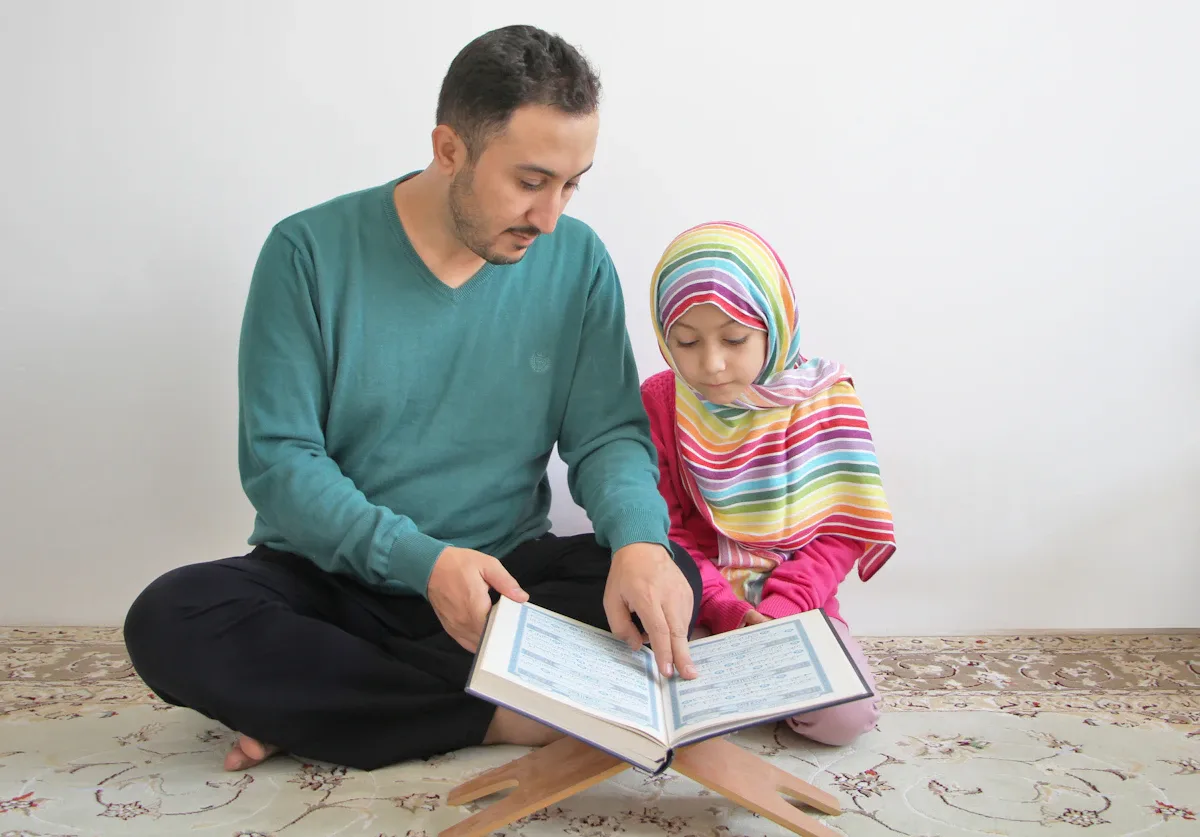
The third advantage is visibility. Parents can sit nearby, hear how the teacher corrects mistakes and see exactly what their child is learning. That kind of transparency is rarely possible in a busy classroom.
What to Look for in an Online Quran Academy in the USA
When parents search for an online quran academy in usa, they usually compare prices first. Price matters, but it should be the last filter, not the first. Start with these questions:
- Who are the teachers? Look for recognized training in recitation, such as an ijazah or formal study, and real experience teaching your learner’s age group.
- Is there a clear curriculum? A good academy can explain the stages a student will go through and roughly how long each takes.
- Are lessons live? Tajweed mistakes are very hard to notice alone. Real-time correction by a teacher cannot be replaced by recorded videos.
- Is there a trial lesson? A short free or low-cost session shows you the teacher’s style before you commit.
- How is progress reported? Short regular updates keep parents informed and keep the academy accountable.
An academy that answers these questions plainly, without pressure, is usually one worth continuing the conversation with.
The Right Starting Point for Young Children
Many parents want their child to begin reading the Quran immediately, but the fastest path is actually to start with the basics. Before reading verses fluently, a child needs to recognize the Arabic letters, know their sounds and understand how short and long vowels change a word. That foundation is exactly what a Noorani Qaida program teaches.
A well-designed noorani qaida course for kids moves through the alphabet, letter shapes at the beginning, middle and end of words, vowel marks, long vowels, sukoon, shaddah and the first rules of tajweed. Each step is short and repeated until it is natural. For children, that repetition matters more than speed.
Look for lessons of about thirty to forty minutes with visuals, short exercises and positive feedback. Young learners lose focus quickly, and a teacher who keeps the lesson interactive will get far better results than one who simply reads and waits. Parents can help by sitting in for the first few sessions and by encouraging ten minutes of practice each day between lessons.
For that daily practice, you can open our free Noorani Qaida PDF and go over the same page your child covered in class.
One-to-One or Group Classes?
Group classes are usually less expensive and can motivate children who enjoy learning with peers. Their limit is attention: one teacher cannot correct every mistake from every student in a session. In a private lesson, the teacher listens only to you, adjusts the pace to your level and spends the whole time on the points you actually struggle with.
This is why private lessons suit beginners, adult learners returning to the Quran after many years, and anyone serious about tajweed or memorization. Many women and teenage girls also feel more at ease in a private setting with a female teacher, where they can ask questions freely and repeat a verse as many times as needed. For these learners, one to one quran classes online with a qualified female instructor can be the most comfortable and effective choice.
A practical approach is to begin with private lessons to build correct pronunciation and then, if desired, add a group class later for revision and confidence.
Scheduling Across American Time Zones
The United States spans several time zones, and many teachers live in other parts of the world. Before the first lesson, confirm the time in your own local time zone and in writing. Ask what happens when daylight saving time begins or ends, because the clocks change on different dates in different countries and a regular lesson can suddenly move by an hour.
Also agree on a rescheduling policy in advance. Families have busy weeks, and an academy that lets you move a lesson with reasonable notice will help you stay consistent instead of quitting.
Building a Routine That Lasts
The academy is only part of the picture. Progress in Quran recitation comes from frequent, short practice, not from one long weekly session followed by silence. A few habits make a big difference:
- Choose a quiet space with a stable internet connection and a reliable headset.
- Use the same copy of the mushaf as the teacher, so everyone follows the same text.
- Review the corrected section on the same day while it is still fresh.
- Keep a simple notebook of what was learned and what needs repeating.
- Set a fixed time each day, even if it is only ten or fifteen minutes.
How Long Does It Take to Learn to Read the Quran?
There is no single answer, because it depends on age, starting level and how often the student practices. A young child who starts from the alphabet and attends lessons several times a week can often read simple passages with correct pronunciation within several months. Adults who already know the letters may progress faster, while those starting from zero need patience. The important point is that steady progress beats speed. A student who learns each rule properly will read more accurately in the long run than one who rushes ahead.
Ask the academy to give an estimated timeline based on your learner’s starting level, and to adjust it honestly as lessons continue. A teacher who says “it depends, and here is how we will measure it” is more trustworthy than one who guarantees a date.
Questions Parents Often Ask
Should my child learn Arabic as well?
Learning the Arabic alphabet and reading rules is essential for reciting the Quran. Understanding the meaning of the Arabic language is a separate goal, and many families add it later once reading is comfortable.
Is tajweed necessary from the beginning?
Basic tajweed should be introduced early, in simple form, so that correct habits form before wrong ones settle in. Advanced rules can follow gradually.
What if my child loses motivation?
This is common and is often a sign that lessons are too long, too difficult or too repetitive. Talk to the teacher, shorten the practice, add small rewards for consistency, and keep the atmosphere positive. A child who feels encouraged will return to the Quran willingly.
Red Flags to Watch For
Not every academy deserves your trust. Be cautious if you notice any of the following:
- Promises that a child will memorize the whole Quran in an unrealistically short time.
- No way to speak with the teacher or the academy before paying.
- Pressure to prepay for a long package, or no clear refund and cancellation policy.
- Vague answers about who the teachers are and how they were trained.
- Constant changes of teacher, which reset a student’s progress each time.
Final Thoughts
The best choice is rarely the loudest advertisement or the lowest price. It is the academy with qualified teachers, a clear path from the first letter to fluent recitation, and an honest trial lesson. Take your time, compare two or three options, and watch the learner’s progress over the first few weeks. When a child looks forward to the lesson and a parent can hear steady improvement, you have found the right fit, and the habit you build now can stay with your family for years.