Nazar Ki Dua in Arabic, Urdu, Hindi and English
This nazar ki dua is the first one to learn. It is short, authentic and can be said for yourself, your children, your home and your business.
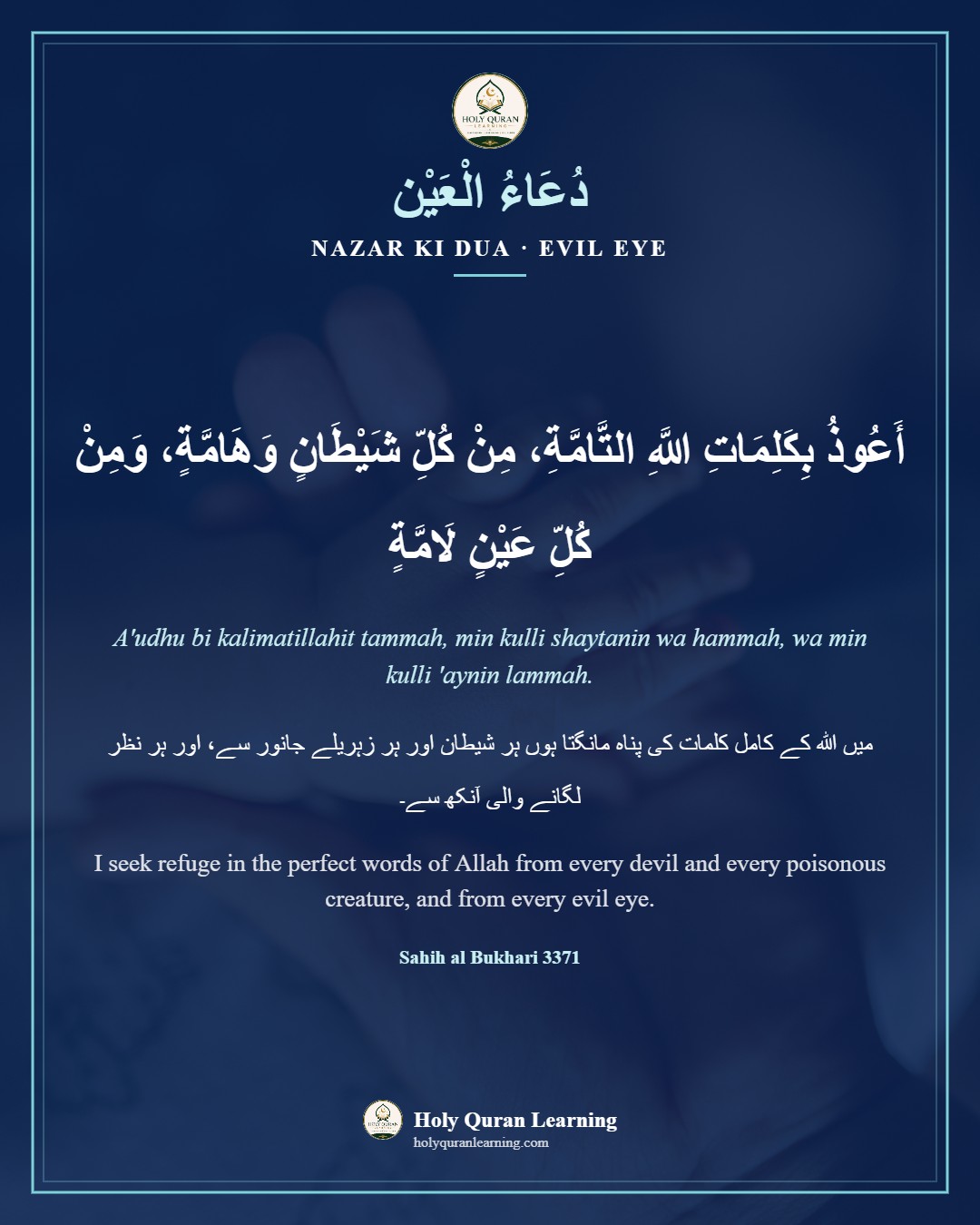
أَعُوذُ بِكَلِمَاتِ اللَّهِ التَّامَّةِ، مِنْ كُلِ͏ّ شَيْطَانٍ وَهَامَّةٍ، وَمِنْ كُلِ͏ّ عَيْنٍ لَامَّةٍ
A’udhu bi kalimatillahit tammah, min kulli shaytanin wa hammah, wa min kulli ‘aynin lammah.
I seek refuge in the perfect words of Allah from every devil and every poisonous creature, and from every evil eye.
میں اللہ کے کامل کلمات کی پناہ مانگتا ہوں ہر شیطان اور ہر زہریلے جانور سے، اور ہر نظر لگانے والی آنکھ سے۔
अऊज़ु बि कलिमातिल्लाहित ताम्मह, मिन कुल्लि शैतानिंव व हाम्मह, व मिन कुल्लि ऐनिल लाम्मह
मैं अल्लाह के कामिल कलिमात की पनाह माँगता हूँ हर शैतान और हर ज़हरीले जानवर से, और हर बुरी नज़र से।
Nazar ki dua is the protection from the evil eye that the Prophet Muhammad ﷺ taught. The most authentic one is “A’udhu bi kalimatillahit tammah, min kulli shaytanin wa hammah, wa min kulli ‘aynin lammah”, recorded in Sahih al Bukhari 3371. The Prophet ﷺ recited it over his grandsons al Hasan and al Husain to protect them from nazar e bad.
On this page you will find every authentic dua for the evil eye in Arabic, Roman English, Urdu, Hindi and English, with references and copy buttons. We also explain how to protect children from buri nazar, what to say when you admire something, how to do nazar utarne ki ruqyah at home, and which popular customs have no basis in Islam.
دُعَاءُ الْعَيْن
Nazar Ki Dua · Sahih al Bukhari 3371 · Protection from the evil eye
Protection from nazar at a glance
- The evil eye is real: “Al ‘aynu haqq” (Bukhari 5740, Muslim 2188).
- Main dua: “A’udhu bi kalimatillahit tammah…” (Bukhari 3371).
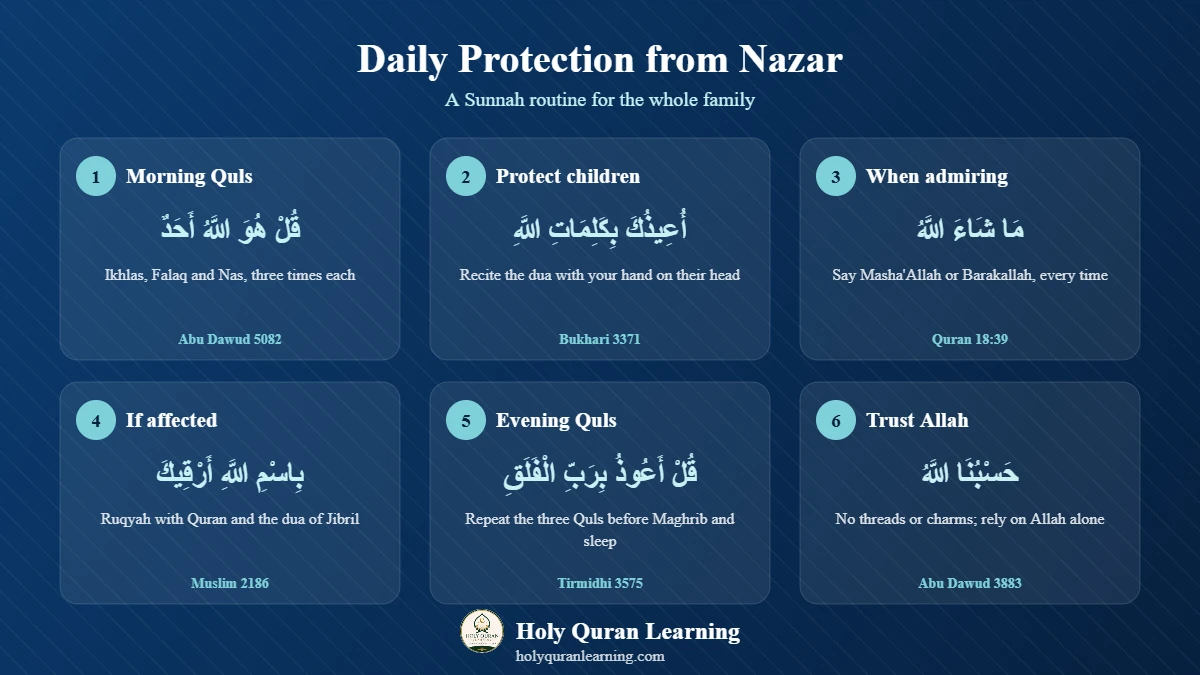
- Every morning and evening: Ikhlas, Falaq and Nas, three times each (Abu Dawud 5082).
- When admiring someone: say Masha’Allah or Barakallah.
- To remove nazar: ruqyah with Quran and the dua of Jibril (Muslim 2186).
- Black threads, chillies and lemons have no basis in Islam.
Is Nazar Real in Islam?
Yes. The Prophet ﷺ said: “The evil eye is real, and if anything were to overtake destiny, it would be the evil eye” (Sahih Muslim 2188). Aisha reported that he told her to seek ruqyah for it (Bukhari 5738). Nazar comes from an admiring or envious look, sometimes even from a loving relative who forgets to say Masha’Allah, which is why the Sunnah focuses on blessing, not suspicion.
Allah also mentions how the disbelievers looked at the Prophet ﷺ with hostile eyes:
وَاِنۡ يَّكَادُ الَّذِيۡنَ كَفَرُوۡا لَيُزۡلِقُوۡنَكَ بِاَبۡصَارِهِمۡ لَمَّا سَمِعُوا الذِ͏ّكۡرَ وَيَقُوۡلُوۡنَ اِنَّهٗ لَمَجۡنُوۡنٌۘ ٥١
Wa in yakadul ladhina kafaru la yuzliqunaka bi absarihim lamma sami’udh dhikra wa yaquluna innahu la majnun.
And indeed, those who disbelieve would almost make you slip with their eyes when they hear the Reminder, and they say, “Indeed, he is mad.”
اور کافر جب قرآن سنتے ہیں تو یوں لگتا ہے کہ تمہیں اپنی نگاہوں سے پھسلا دیں گے، اور کہتے ہیں کہ یہ تو دیوانہ ہے۔
व इंय यकादुल लज़ीना कफ़रू लयुज़्लिक़ूनका बि अब्सारिहिम लम्मा समिउज़ ज़िक्रा व यक़ूलूना इन्नहू ल मजनून
और काफ़िर जब क़ुरआन सुनते हैं तो लगता है कि तुम्हें अपनी निगाहों से फिसला देंगे, और कहते हैं कि यह तो दीवाना है।
Ibn Kathir and other mufassirun link this verse to the evil eye. Reciting it is part of ruqyah, but a fixed number of repetitions has no textual basis.
Bachon Ko Nazar Se Bachane Ki Dua (Protecting Children)
Babies and young children are the most common worry for parents. The Prophet ﷺ recited this nazar ki dua over al Hasan and al Husain. Use u’idhuka for one boy, u’idhuki for one girl, and u’idhukuma for two children.
أُعِيذُكُمَا بِكَلِمَاتِ اللَّهِ التَّامَّةِ، مِنْ كُلِ͏ّ شَيْطَانٍ وَهَامَّةٍ، وَمِنْ كُلِ͏ّ عَيْنٍ لَامَّةٍ
U’idhukuma bi kalimatillahit tammah, min kulli shaytanin wa hammah, wa min kulli ‘aynin lammah.
I place you both under the protection of the perfect words of Allah, from every devil and every poisonous creature, and from every evil eye.
میں تم دونوں کو اللہ کے کامل کلمات کی پناہ میں دیتا ہوں ہر شیطان اور ہر زہریلے جانور سے، اور ہر نظر لگانے والی آنکھ سے۔
उईज़ुकुमा बि कलिमातिल्लाहित ताम्मह, मिन कुल्लि शैतानिंव व हाम्मह, व मिन कुल्लि ऐनिल लाम्मह
मैं तुम दोनों को अल्लाह के कामिल कलिमात की पनाह में देता हूँ हर शैतान और हर ज़हरीले जानवर से, और हर बुरी नज़र से।
Sahih al Bukhari 3371 records the same words in the first person, “A’udhu…”, which you can say for yourself.
- Morning: recite Ikhlas, Falaq and Nas three times each, then blow gently over your child.
- Recite nazar ki dua: “U’idhuka bi kalimatillahit tammah…” while placing your hand on the child’s head.
- Visitors: kindly encourage guests to say Masha’Allah or Barakallah when they praise your baby.
- Evening: repeat the three Quls and the dua before sleep.
- Social media: share photos thoughtfully; a simple caption with Masha’Allah reminds others to bless.
Buri Nazar Se Bachne Ki Dua When You Admire Something
Most nazar is given without bad intention. When Amir ibn Rabi’ah admired Sahl ibn Hunayf and Sahl fell ill, the Prophet ﷺ asked: “Why did you not pray for blessing?” (Ibn Majah 3509). So whenever you like something about a person, their child, home or car, say:
وَلَوۡلَاۤ اِذۡ دَخَلۡتَ جَنَّتَكَ قُلۡتَ مَا شَآءَ اللّٰهُ ۙ لَا قُوَّةَ اِلَّا بِاللّٰهِ ۚ · اللَّهُمَّ بَارِكْ عَلَيْهِ
Masha’Allah, la quwwata illa billah · Allahumma barik ‘alayh.
What Allah wills; there is no power except with Allah. O Allah, bless him (or her).
جو اللہ چاہے، اللہ کے سوا کوئی طاقت نہیں۔ اے اللہ! اس میں برکت دے۔
माशाअल्लाह, ला क़ुव्वता इल्ला बिल्लाह · अल्लाहुम्मा बारिक अलैह
जो अल्लाह चाहे, अल्लाह के सिवा कोई ताक़त नहीं। ऐ अल्लाह! इसमें बरकत दे।
“Masha’Allah la quwwata illa billah” is from Quran 18:39. Asking Allah to bless what you admire applies the instruction in Ibn Majah 3509.
Nazar Utarne Ki Dua: Ruqyah Step by Step
If you believe someone has been affected by nazar, recite nazar ki dua and perform ruqyah yourself. You do not need to pay anyone; the Prophet ﷺ and his family did it at home.
- Make wudu and sit calmly beside the person.
- Recite Surah Al Fatihah, Ayatul Kursi and the last two verses of Al Baqarah.
- Recite Ikhlas, Falaq and Nas three times each, blowing lightly after each.
- Say the ruqyah of Jibril below, with your hand on the place of pain if there is one.
- Make dua for shifa in your own words and repeat daily until they recover.
بِاسْمِ اللَّهِ أَرْقِيكَ، مِنْ كُلِ͏ّ شَيْءٍ يُؤْذِيكَ، مِنْ شَرِ͏ّ كُلِ͏ّ نَفْسٍ أَوْ عَيْنِ حَاسِدٍ، اللَّهُ يَشْفِيكَ، بِاسْمِ اللَّهِ أَرْقِيكَ
Bismillahi arqika, min kulli shay’in yu’dhika, min sharri kulli nafsin aw ‘ayni hasidin, Allahu yashfik, bismillahi arqik.
In the name of Allah I perform ruqyah for you, from everything that harms you, from the evil of every soul or envious eye. May Allah cure you. In the name of Allah I perform ruqyah for you.
اللہ کے نام سے میں تجھ پر دم کرتا ہوں، ہر اس چیز سے جو تجھے تکلیف دے، ہر نفس کے شر سے یا حسد کرنے والی آنکھ سے، اللہ تجھے شفا دے، اللہ کے نام سے میں تجھ پر دم کرتا ہوں۔
बिस्मिल्लाहि अरक़ीक, मिन कुल्लि शैइंय युज़ीक, मिन शर्रि कुल्लि नफ़्सिन औ ऐनि हासिद, अल्लाहु यश्फ़ीक, बिस्मिल्लाहि अरक़ीक
अल्लाह के नाम से मैं तुझ पर दम करता हूँ, हर उस चीज़ से जो तुझे तकलीफ़ दे, हर नफ़्स के शर से या हसद करने वाली आँख से, अल्लाह तुझे शिफ़ा दे।
The Sunnah washing remedy
If you know who gave the nazar, the Prophet ﷺ told that person to wash (wudu) and the water was poured over the one affected, who then recovered (Muwatta, Ibn Majah 3509; Abu Dawud 3880). Ask gently and without blame; most people are happy to help.
Morning and Evening Protection from Nazar
Abdullah ibn Khubayb reported that the Prophet ﷺ said: recite Qul huwa Allahu ahad and the two Mu’awwidhatayn three times in the morning and evening, “they will suffice you against everything” (Abu Dawud 5082, Tirmidhi 3575). Together with nazar ki dua, this is the strongest daily shield for the whole family. If your children are still learning these surahs, our Quran classes for kids start with exactly these short surahs.
Common Nazar Customs With No Basis in Islam
Scholars differ about wearing a taweez that contains only Quranic verses; many Hanafi scholars allow it while others forbid it. The authentic nazar ki dua and daily adhkar above are agreed upon and sufficient. And remember: not every illness is nazar. See a doctor for medical problems and use ruqyah alongside treatment.
Nazar Ki Dua PDF Download
Print this free nazar ki dua PDF for your fridge or your child’s room. It contains every dua on this page in large, bold Arabic with Roman English, English and Urdu, plus the daily routine.
Want your family to recite these duas correctly? Learn the three Quls, Ayatul Kursi and daily duas with a qualified teacher in our one to one online Quran classes. Free trial lesson included.
Also read: safar ki dua for protection on journeys and the istikhara dua for big decisions.
Nazar Ki Dua: Frequently Asked Questions
What is the dua for nazar?
The most authentic nazar ki dua is “A’udhu bi kalimatillahit tammah, min kulli shaytanin wa hammah, wa min kulli ‘aynin lammah”, from Sahih al Bukhari 3371. The Prophet ﷺ used it to protect al Hasan and al Husain.
Is nazar (the evil eye) real in Islam?
Yes. The Prophet ﷺ said “The evil eye is real” (Bukhari 5740, Muslim 2188), and he commanded ruqyah for it (Bukhari 5738).
How do I protect my child from nazar?
Recite Surah Al Ikhlas, Al Falaq and An Nas three times every morning and evening, read “U’idhuka bi kalimatillahit tammah…” over your child, and teach family and guests to say Masha’Allah or Barakallah when they admire the child.
What should I say when I admire something?
Say Masha’Allah, la quwwata illa billah (Quran 18:39) or ask Allah to bless it, such as “Allahumma barik ‘alayh”. The Prophet ﷺ told a companion whose gaze harmed someone: “Why did you not pray for blessing?” (Ibn Majah 3509).
What is nazar utarne ki dua?
To remove nazar, recite Surah Al Fatihah, Ayatul Kursi, Al Ikhlas, Al Falaq and An Nas, blow lightly over the person and recite the ruqyah of Jibril: “Bismillahi arqika…” (Muslim 2186). If you know who gave the eye, the Sunnah washing remedy can also be used.
Is a black thread or nimbu mirchi allowed for nazar?
No. These customs have no basis in the Quran or Sunnah, and the Prophet ﷺ warned against hanging amulets for protection (Abu Dawud 3883). Rely on the authentic duas and adhkar instead.
Can nazar affect me if I say the morning and evening adhkar?
The Prophet ﷺ said the three Quls recited morning and evening “will suffice you against everything” (Abu Dawud 5082). Keep them consistently and trust Allah; seek medical help for any illness as well.
Sources: Bukhari 3371 · Bukhari 5740 · Muslim 2188 · Muslim 2186 · Ibn Majah 3509 · Abu Dawud 5082 · Abu Dawud 3883
More Masnoon Duas for Daily Life
Pair your duas with the surahs the Prophet ﷺ recited for protection and blessing: Surah Falaq, Surah Mulk and Surah Yaseen. You can also learn the 99 Names of Allah or browse all masnoon duas.