Read Surah Waqiah: Text with Translation, Audio, Images or PDF
Tap any verse to hear that verse recited by Sheikh Mishary Rashid Alafasy, then tap again to stop. Choose how you want to read. Images show the full surah in bold Indo-Pak script with waqf signs, Text shows every verse with transliteration, English and Urdu translation, and PDF lets you download and print.
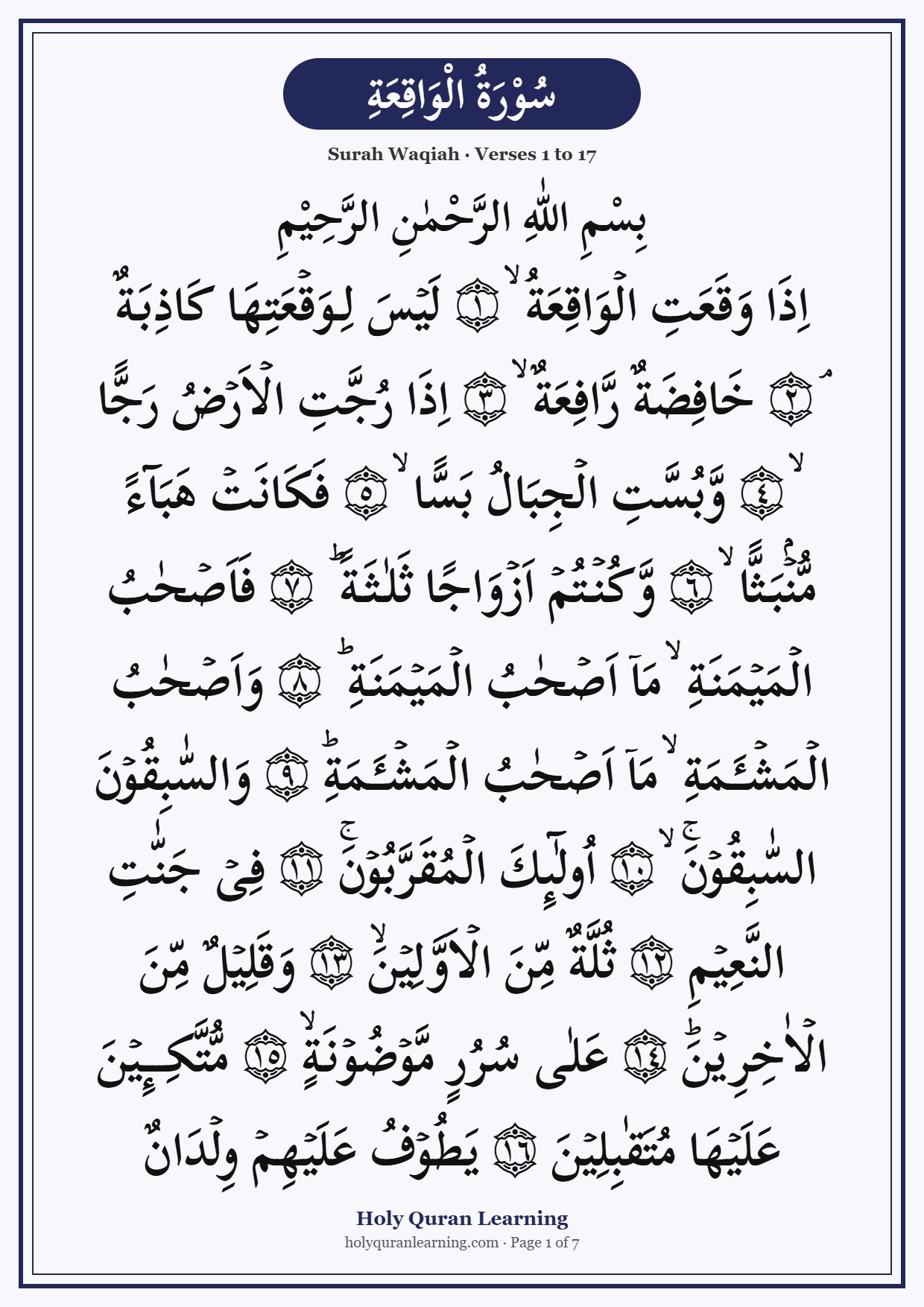
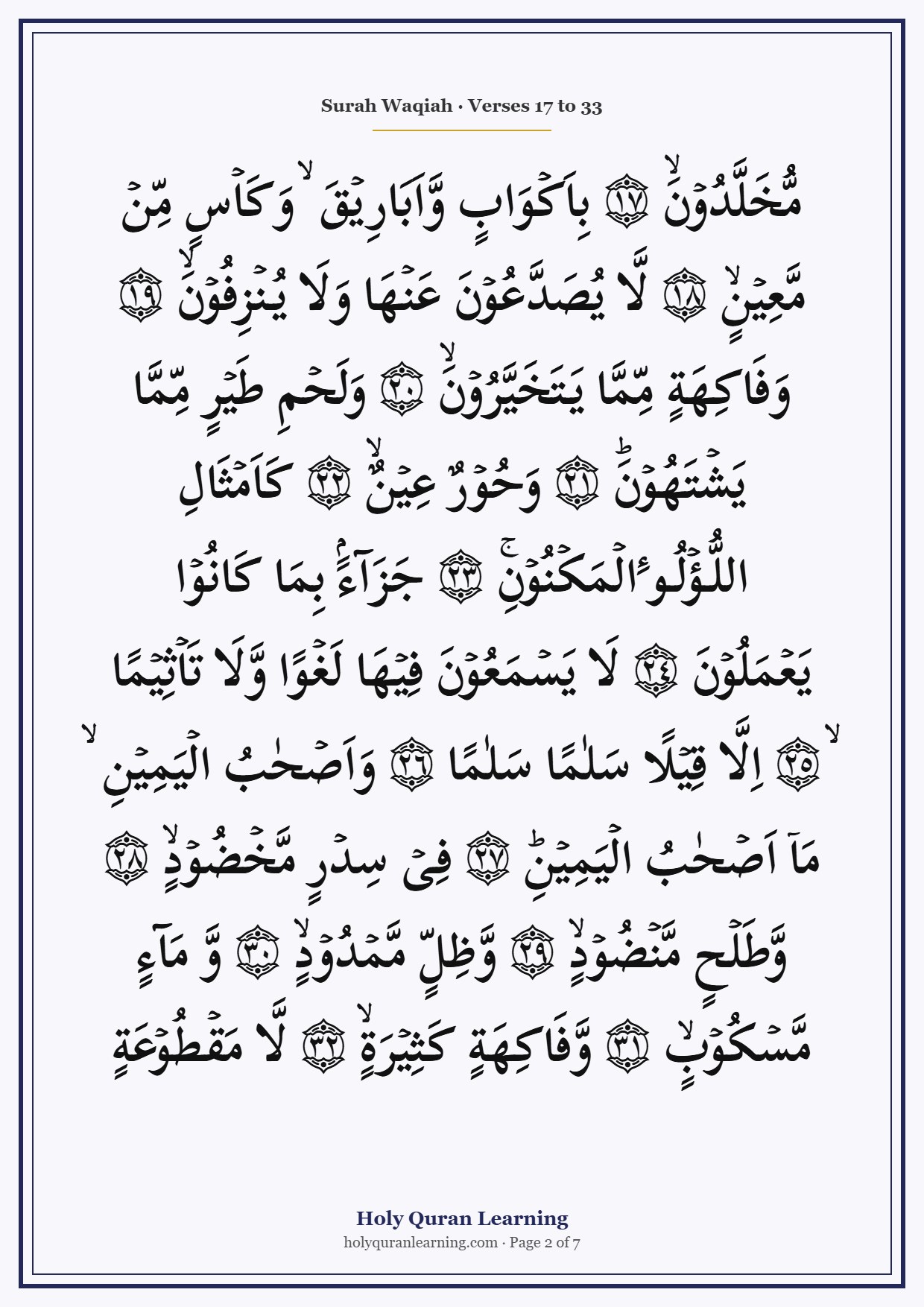
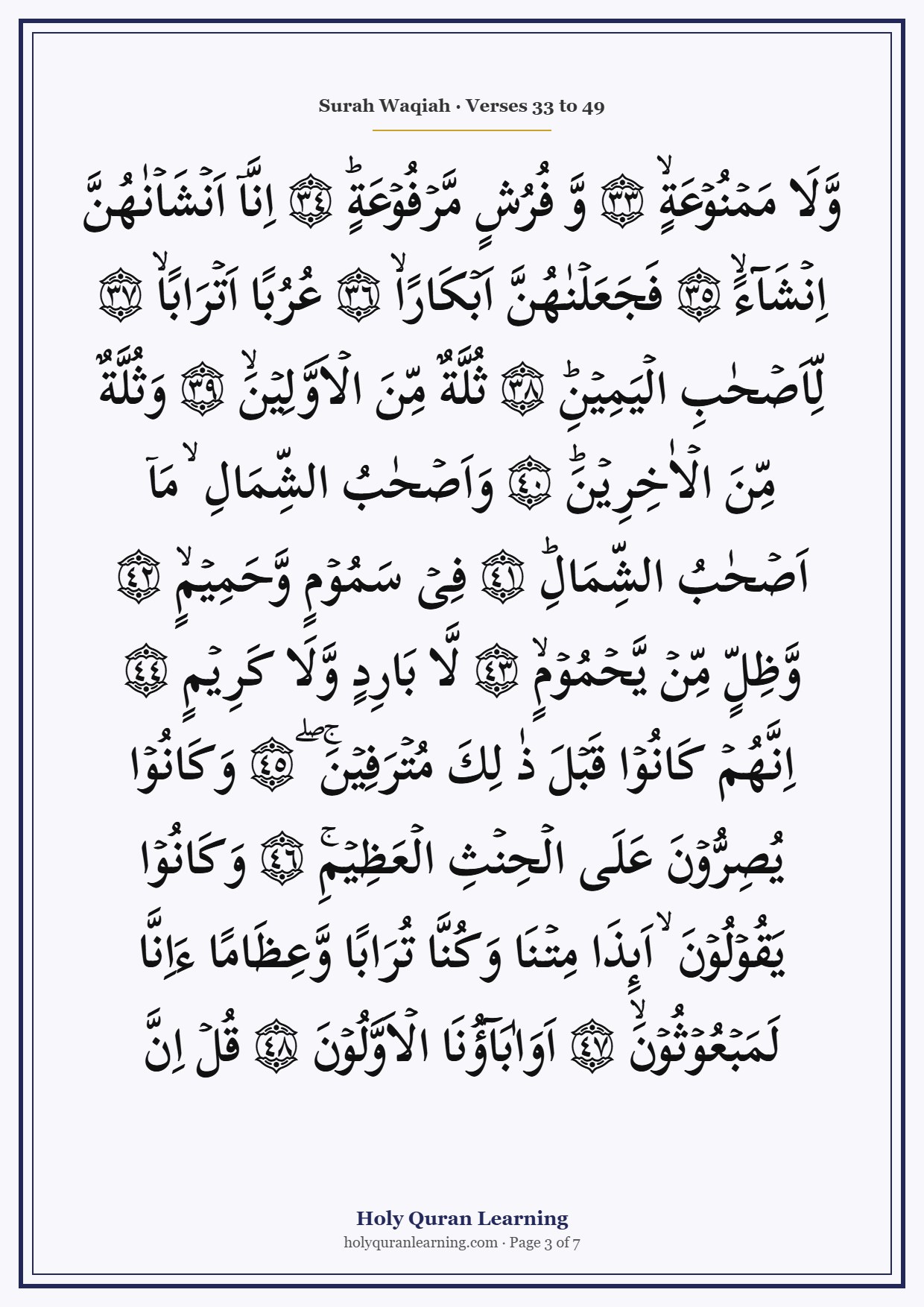
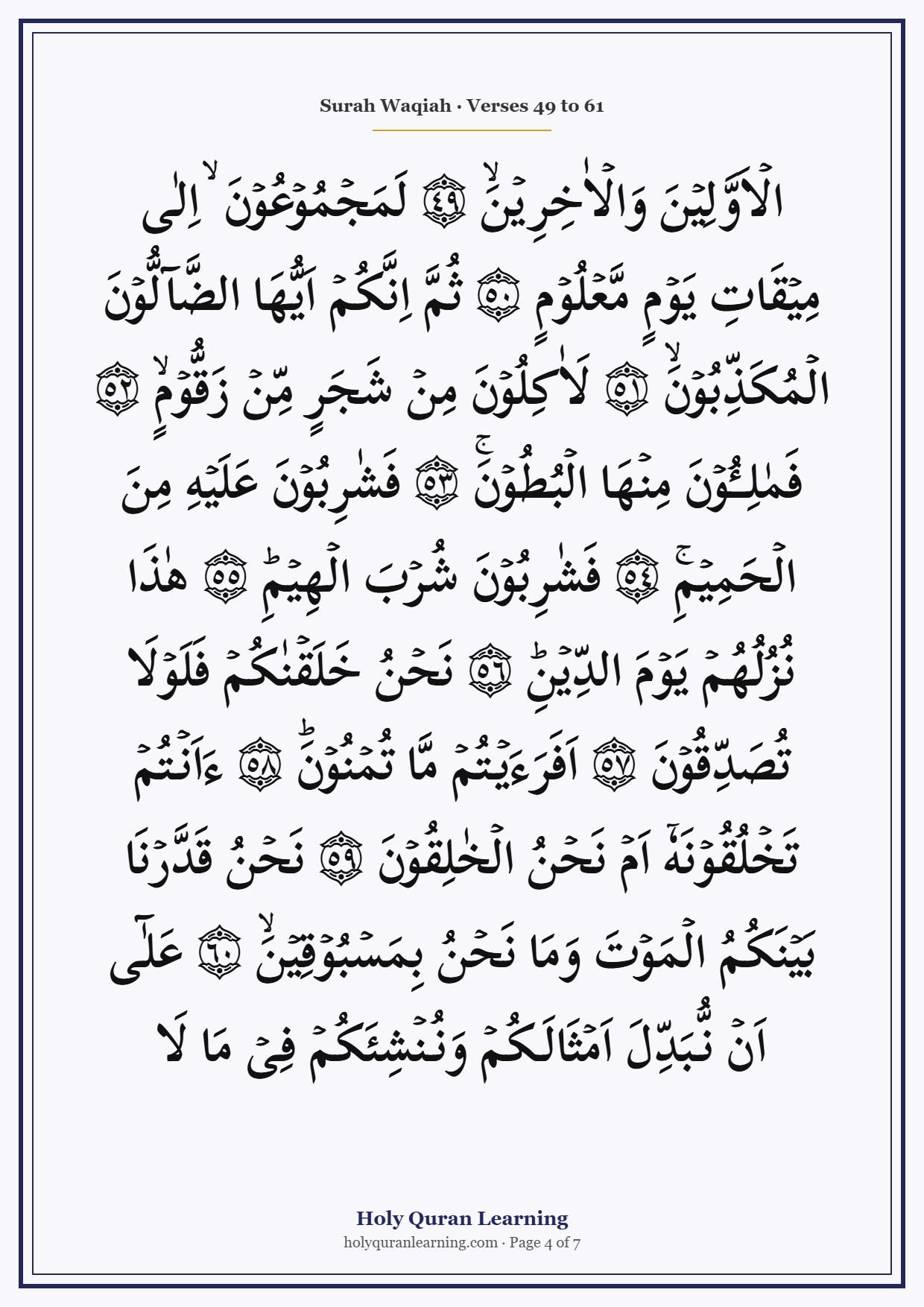
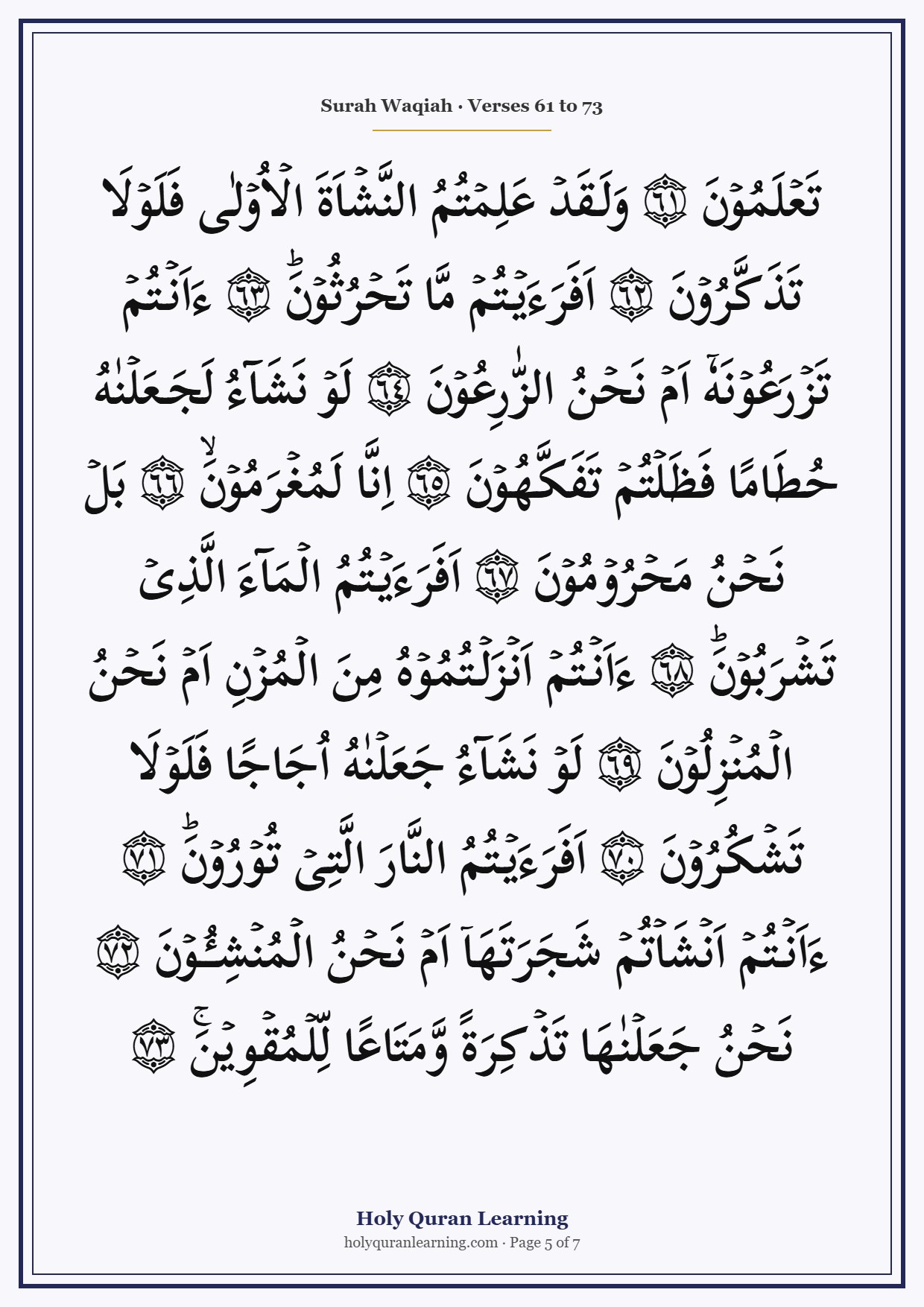
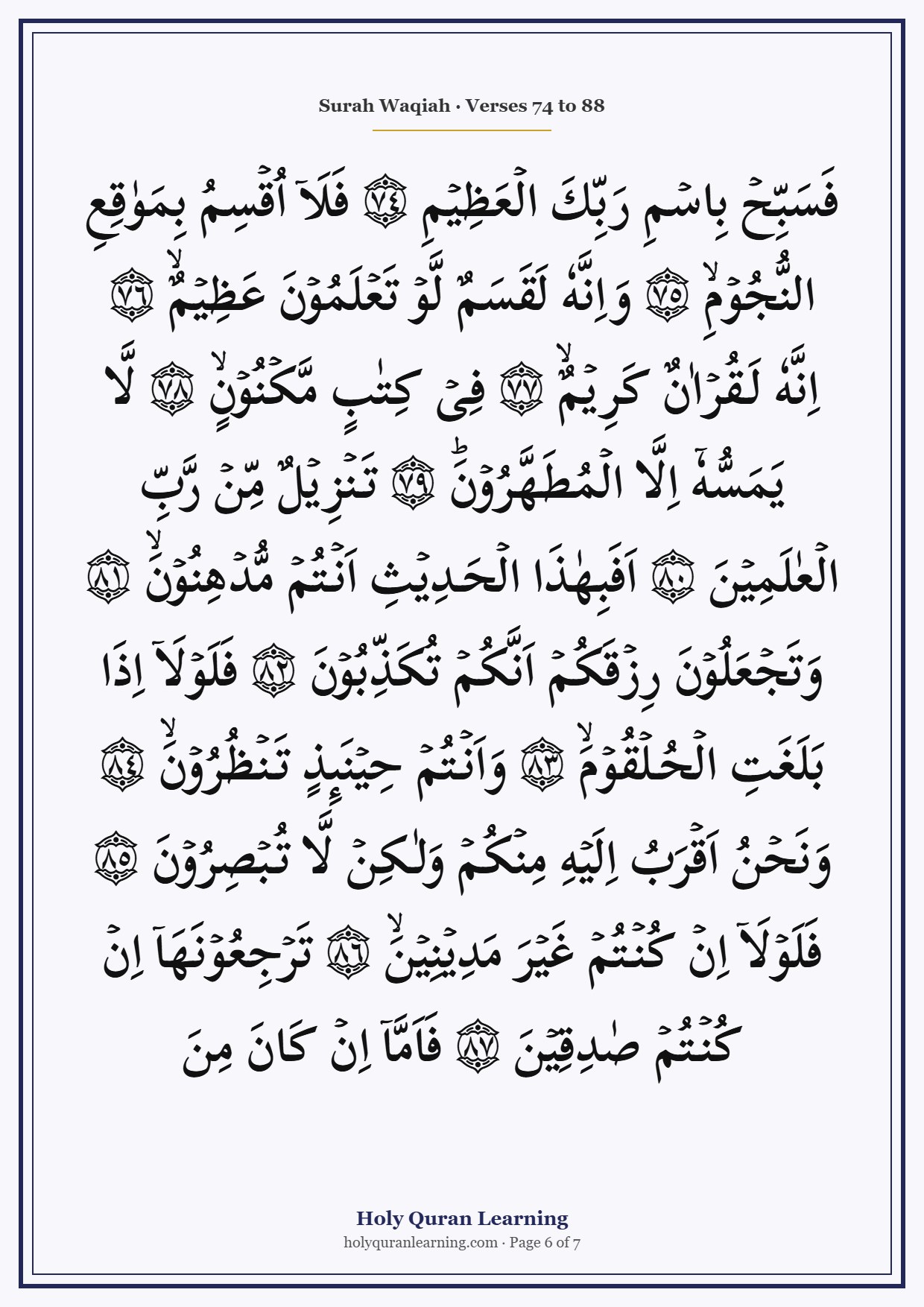
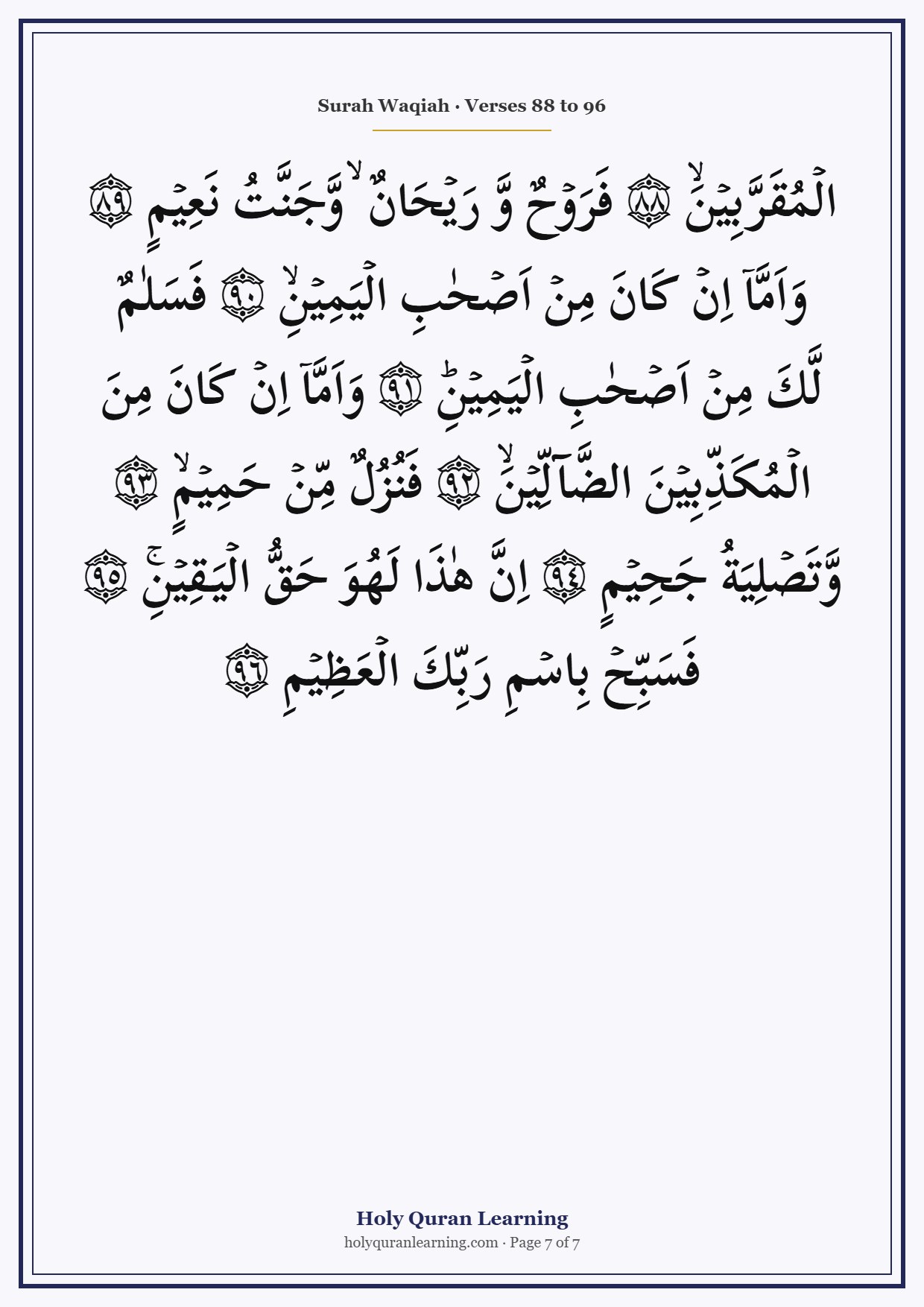
Surah Waqiah Full Image
Prefer to read from a picture? These images show the complete Surah Waqiah in large, bold Arabic script that is easy to read even if Arabic is not your first language. Save them to your phone and read even when you are offline.
Read Surah Waqiah Online (Full Arabic Text with Translation)
All 96 verses of Surah Waqiah are below, grouped by ruku. Each verse shows the Arabic text, Roman transliteration, English translation and Urdu translation (اردو ترجمہ). Use the buttons to show or hide each language.
بِسْمِ ٱللَّهِ ٱلرَّحْمَٰنِ ٱلرَّحِيمِ
اِذَا وَقَعَتِ الۡوَاقِعَةُ ۙ1
Itha waqa’ati alwaqi’at
1. When the event befalleth –
جب واقع ہونے والی واقع ہوجائے
لَيۡسَ لِـوَقۡعَتِهَا كَاذِبَةٌ ۘ2
Laysa liwaq’atiha kathiba
2. There is no denying that it will befall –
اس کے واقع ہونے میں کچھ جھوٹ نہیں
خَافِضَةٌ رَّافِعَةٌ ۙ3
Khafidatun rafi’a
3. Abasing (some), exalting (others);
کسی کو پست کرے کسی کو بلند
اِذَا رُجَّتِ الۡاَرۡضُ رَجًّا ۙ4
Itha rujjati al-ardu rajja
4. When the earth is shaken with a shock
جب زمین بھونچال سے لرزنے لگے
وَّبُسَّتِ الۡجِبَالُ بَسًّا ۙ5
Wabussati aljibalu bassa
5. And the hills are ground to powder
اور پہاڑ ٹوٹ کر ریزہ ریزہ ہوجائیں
فَكَانَتۡ هَبَآءً مُّنۡۢبَـثًّا ۙ6
Fakanat habaan munbaththa
6. So that they become a scattered dust
پھر غبار ہو کر اُڑنے لگیں
وَّكُنۡـتُمۡ اَزۡوَاجًا ثَلٰـثَـةً ؕ7
Wakuntum azwajan thalatha
7. And ye will be three kinds:
اور تم لوگ تین قسم ہوجاؤ
فَاَصۡحٰبُ الۡمَيۡمَنَةِ ۙ مَاۤ اَصۡحٰبُ الۡمَيۡمَنَةِ ؕ8
Faas-habu almaymanati maas-habu almaymanat
8. (First) those on the right hand; what of those on the right hand?
تو داہنے ہاتھ والے (سبحان الله) داہنے ہاتھ والے کیا (ہی چین میں) ہیں
وَاَصۡحٰبُ الۡمَشۡـَٔـمَةِ ۙ مَاۤ اَصۡحٰبُ الۡمَشۡـَٔـمَةِؕ9
Waas-habu almash-amati maas-habu almash-amat
9. And (then) those on the left hand; what of those on the left hand?
اور بائیں ہاتھ والے (افسوس) بائیں ہاتھ والے کیا (گرفتار عذاب) ہیں
وَالسّٰبِقُوۡنَ السّٰبِقُوۡنَۚ ۙ10
Wassabiqoona assabiqoon
10. And the foremost in the race, the foremost in the race:
اور جو آگے بڑھنے والے ہیں (ان کا کیا کہنا) وہ آگے ہی بڑھنے والے ہیں
اُولٰٓٮِٕكَ الۡمُقَرَّبُوۡنَۚ11
Ola-ika almuqarraboon
11. Those are they who will be brought nigh
وہی (خدا کے) مقرب ہیں
فِىۡ جَنّٰتِ النَّعِيۡمِ12
Fee jannati anna’eem
12. In gardens of delight;
نعمت کے بہشتوں میں
ثُلَّةٌ مِ͏ّنَ الۡاَوَّلِيۡنَۙ13
Thullatun mina al-awwaleen
13. A multitude of those of old
وہ بہت سے تو اگلے لوگوں میں سے ہوں گے
وَقَلِيۡلٌ مِ͏ّنَ الۡاٰخِرِيۡنَؕ14
Waqaleelun mina al-akhireena
14. And a few of those of later time.
اور تھوڑے سے پچھلوں میں سے
عَلٰى سُرُرٍ مَّوۡضُوۡنَةٍۙ15
‘ala sururin mawdoona
15. On lined couches
(لعل و یاقوت وغیرہ سے) جڑے ہوئے تختوں پر
مُّتَّكِـــِٕيۡنَ عَلَيۡهَا مُتَقٰبِلِيۡنَ16
Muttaki-eena ‘alayha mutaqabileen
16. Reclining therein face to face.
آمنے سامنے تکیہ لگائے ہوئے
يَطُوۡفُ عَلَيۡهِمۡ وِلۡدَانٌ مُّخَلَّدُوۡنَۙ17
Yatoofu ‘alayhim wildanunmukhalladoon
17. There wait on them immortal youths
نوجوان خدمت گزار جو ہمیشہ (ایک ہی حالت میں) رہیں گے ان کے آس پاس پھریں گے
بِاَكۡوَابٍ وَّاَبَارِيۡقَ ۙ وَكَاۡسٍ مِ͏ّنۡ مَّعِيۡنٍۙ18
Bi-akwabin waabareeqa waka/sinmin ma’een
18. With bowls and ewers and a cup from a pure spring
یعنی آبخورے اور آفتابے اور صاف شراب کے گلاس لے لے کر
لَّا يُصَدَّعُوۡنَ عَنۡهَا وَلَا يُنۡزِفُوۡنَۙ19
La yusadda’oona ‘anhawala yunzifoon
19. Wherefrom they get no aching of the head nor any madness
اس سے نہ تو سر میں درد ہوگا اور نہ ان کی عقلیں زائل ہوں گی
وَفَاكِهَةٍ مِ͏ّمَّا يَتَخَيَّرُوۡنَۙ20
Wafakihatin mimmayatakhayyaroon
20. And fruit that they prefer
اور میوے جس طرح کے ان کو پسند ہوں
وَلَحۡمِ طَيۡرٍ مِ͏ّمَّا يَشۡتَهُوۡنَؕ21
Walahmi tayrin mimmayashtahoon
21. And flesh of fowls that they desire.
اور پرندوں کا گوشت جس قسم کا ان کا جی چاہے
وَحُوۡرٌ عِيۡنٌۙ22
Wahoorun ‘een
22. And (there are) fair ones with wide, lovely eyes
اور بڑی بڑی آنکھوں والی حوریں
كَاَمۡثَالِ اللُّـؤۡلُـوٴِالۡمَكۡنُوۡنِۚ23
Kaamthali allu/lui almaknoon
23. Like unto hidden pearls
جیسے (حفاظت سے) تہہ کئے ہوئے (آب دار) موتی
جَزَآءًۢ بِمَا كَانُوۡا يَعۡمَلُوۡنَ24
Jazaan bima kanooya’maloon
24. Reward for what they used to do.
یہ ان اعمال کا بدلہ ہے جو وہ کرتے تھے
لَا يَسۡمَعُوۡنَ فِيۡهَا لَغۡوًا وَّلَا تَاۡثِيۡمًا ۙ25
La yasma’oona feeha laghwanwala ta/theema
25. There hear they no vain speaking nor recrimination
وہاں نہ بیہودہ بات سنیں گے اور نہ گالی گلوچ
اِلَّا قِيۡلًا سَلٰمًا سَلٰمًا26
Illa qeelan salaman salama
26. (Naught) but the saying: Peace, (and again) Peace.
ہاں ان کا کلام سلام سلام (ہوگا)
وَاَصۡحٰبُ الۡيَمِيۡنِ ۙ مَاۤ اَصۡحٰبُ الۡيَمِيۡنِؕ27
Waas-habu alyameeni maas-habu alyameen
27. And those on the right hand; what of those on the right hand?
اور داہنے ہاتھ والے (سبحان الله) داہنے ہاتھ والے کیا (ہی عیش میں) ہیں
فِىۡ سِدۡرٍ مَّخۡضُوۡدٍۙ28
Fee sidrin makhdood
28. Among thornless lote-trees
(یعنی) بےخار کی بیریوں
وَّطَلۡحٍ مَّنۡضُوۡدٍۙ29
Watalhin mandood
29. And clustered plantains
اور تہہ بہ تہہ کیلوں
وَّظِلٍ͏ّ مَّمۡدُوۡدٍۙ30
Wathillin mamdood
30. And spreading shade
اور لمبے لمبے سایوں
وَّ مَآءٍ مَّسۡكُوۡبٍۙ31
Wama-in maskoob
31. And water gushing
اور پانی کے جھرنوں
وَّفَاكِهَةٍ كَثِيۡرَةٍۙ32
Wafakihatin katheera
32. And fruit in plenty
اور میوہ ہائے کثیرہ (کے باغوں) میں
لَّا مَقۡطُوۡعَةٍ وَّلَا مَمۡنُوۡعَةٍۙ33
La maqtoo’atin walamamnoo’a
33. Neither out of reach nor yet forbidden
جو نہ کبھی ختم ہوں اور نہ ان سے کوئی روکے
وَّ فُرُشٍ مَّرۡفُوۡعَةٍؕ34
Wafurushin marfoo’a
34. And raised couches;
اور اونچے اونچے فرشوں میں
اِنَّاۤ اَنۡشَاۡنٰهُنَّ اِنۡشَآءًۙ35
Inna ansha/nahunna inshaa
35. Lo! We have created them a (new) creation
ہم نے ان (حوروں) کو پیدا کیا
فَجَعَلۡنٰهُنَّ اَبۡكَارًاۙ36
Faja’alnahunna abkara
36. And made them virgins
تو ان کو کنواریاں بنایا
عُرُبًا اَتۡرَابًاۙ37
‘uruban atraba
37. Lovers, friends
(اور شوہروں کی) پیاریاں اور ہم عمر
لِ͏ّاَصۡحٰبِ الۡيَمِيۡنِؕ38
Li-as-habi alyameen
38. For those on the right hand;
یعنی داہنے ہاتھ والوں کے لئے
ثُلَّةٌ مِ͏ّنَ الۡاَوَّلِيۡنَۙ39
Thullatun mina al-awwaleen
39. A multitude of those of old
(یہ) بہت سے اگلے لوگوں میں سے ہیں
وَثُلَّةٌ مِ͏ّنَ الۡاٰخِرِيۡنَؕ40
Wathullatun mina al-akhireen
40. And a multitude of those of later time.
اور بہت سے پچھلوں میں سے
وَاَصۡحٰبُ الشِ͏ّمَالِ ۙ مَاۤ اَصۡحٰبُ الشِ͏ّمَالِؕ41
Waas-habu ashshimalima as-habu ashshimal
41. And those on the left hand: What of those on the left hand?
اور بائیں ہاتھ والے (افسوس) بائیں ہاتھ والے کیا (ہی عذاب میں) ہیں
فِىۡ سَمُوۡمٍ وَّحَمِيۡمٍۙ42
Fee samoomin wahameem
42. In scorching wind and scalding water
(یعنی دوزخ کی) لپٹ اور کھولتے ہوئے پانی میں
وَّظِلٍ͏ّ مِ͏ّنۡ يَّحۡمُوۡمٍۙ43
Wathillin min yahmoom
43. And shadow of black smoke
اور سیاہ دھوئیں کے سائے میں
لَّا بَارِدٍ وَّلَا كَرِيۡمٍ44
La baridin wala kareem
44. Neither cool nor refreshing.
(جو) نہ ٹھنڈا (ہے) نہ خوشنما
اِنَّهُمۡ كَانُوۡا قَبۡلَ ذٰ لِكَ مُتۡرَفِيۡنَۚ ۖ45
Innahum kanoo qabla thalikamutrafeen
45. Lo! heretofore they were effete with luxury
یہ لوگ اس سے پہلے عیشِ نعیم میں پڑے ہوئے تھے
وَكَانُوۡا يُصِرُّوۡنَ عَلَى الۡحِنۡثِ الۡعَظِيۡمِۚ46
Wakanoo yusirroona ‘alaalhinthi al’atheem
46. And used to persist in the awful sin.
اور گناہ عظیم پر اڑے ہوئے تھے
وَكَانُوۡا يَقُوۡلُوۡنَ ۙ اَٮِٕذَا مِتۡنَا وَكُنَّا تُرَابًا وَّعِظَامًا ءَاِنَّا لَمَبۡعُوۡثُوۡنَۙ47
Wakanoo yaqooloona a-itha mitnawakunna turaban wa’ithamana-inna lamab’oothoon
47. And they used to say: When we are dead and have become dust and bones, shall we then, forsooth, be raised again
اور کہا کرتے تھے کہ بھلا جب ہم مرگئے اور مٹی ہوگئے اور ہڈیاں (ہی ہڈیاں رہ گئے) تو کیا ہمیں پھر اُٹھنا ہوگا؟
اَوَاٰبَآؤُنَا الۡاَوَّلُوۡنَ48
Awa abaona al-awwaloon
48. And also our forefathers?
اور کیا ہمارے باپ دادا کو بھی؟
قُلۡ اِنَّ الۡاَوَّلِيۡنَ وَالۡاٰخِرِيۡنَۙ49
Qul inna al-awwaleena wal-akhireen
49. Say (unto them, O Muhammad): Lo! those of old and those of later time
کہہ دو کہ بےشک پہلے اور پچھلے
لَمَجۡمُوۡعُوۡنَ ۙ اِلٰى مِيۡقَاتِ يَوۡمٍ مَّعۡلُوۡمٍ50
Lamajmoo’oona ila meeqatiyawmin ma’loom
50. Will all be brought together to the tryst of an appointed day.
(سب) ایک روز مقرر کے وقت پر جمع کئے جائیں گے
ثُمَّ اِنَّكُمۡ اَيُّهَا الضَّآلُّوۡنَ الۡمُكَذِ͏ّبُوۡنَۙ51
Thumma innakum ayyuha addalloonaalmukaththiboon
51. Then lo! ye, the erring, the deniers
پھر تم اے جھٹلانے والے گمرا ہو!
لَاٰكِلُوۡنَ مِنۡ شَجَرٍ مِ͏ّنۡ زَقُّوۡمٍۙ52
Laakiloona min shajarin min zaqqoom
52. Ye verily will eat of a tree called Zaqqum
تھوہر کے درخت کھاؤ گے
فَمٰلِــُٔوۡنَ مِنۡهَا الۡبُطُوۡنَۚ53
Famali-oona minha albutoon
53. And will fill your bellies therewith;
اور اسی سے پیٹ بھرو گے
فَشٰرِبُوۡنَ عَلَيۡهِ مِنَ الۡحَمِيۡمِۚ54
Fashariboona ‘alayhi mina alhameem
54. And thereon ye will drink of boiling water
اور اس پر کھولتا ہوا پانی پیو گے
فَشٰرِبُوۡنَ شُرۡبَ الۡهِيۡمِؕ55
Fashariboona shurba alheem
55. Drinking even as the camel drinketh.
اور پیو گے بھی تو اس طرح جیسے پیاسے اونٹ پیتے ہیں
هٰذَا نُزُلُهُمۡ يَوۡمَ الدِ͏ّيۡنِؕ56
Hatha nuzuluhum yawma addeen
56. This will be their welcome on the Day of Judgment.
جزا کے دن یہ ان کی ضیافت ہوگی
نَحۡنُ خَلَقۡنٰكُمۡ فَلَوۡلَا تُصَدِ͏ّقُوۡنَ57
Nahnu khalaqnakum falawlatusaddiqoon
57. We created you. Will ye then admit the truth?
ہم نے تم کو (پہلی بار بھی تو) پیدا کیا ہے تو تم (دوبارہ اُٹھنے کو) کیوں سچ نہیں سمجھتے؟
اَفَرَءَيۡتُمۡ مَّا تُمۡنُوۡنَؕ58
Afaraaytum ma tumnoon
58. Have ye seen that which ye emit?
دیکھو تو کہ جس (نطفے) کو تم (عورتوں کے رحم میں) ڈالتے ہو
ءَاَنۡتُمۡ تَخۡلُقُوۡنَهٗۤ اَمۡ نَحۡنُ الۡخٰلِقُوۡنَ59
Aantum takhluqoonahu am nahnu alkhaliqoon
59. Do ye create it or are We the Creator?
کیا تم اس (سے انسان) کو بناتے ہو یا ہم بناتے ہیں؟
نَحۡنُ قَدَّرۡنَا بَيۡنَكُمُ الۡمَوۡتَ وَمَا نَحۡنُ بِمَسۡبُوۡقِيۡنَۙ60
Nahnu qaddarna baynakumualmawta wama nahnu bimasbooqeen
60. We mete out death among you, and We are not to be outrun
ہم نے تم میں مرنا ٹھہرا دیا ہے اور ہم اس (بات) سے عاجز نہیں
عَلٰٓى اَنۡ نُّبَدِ͏ّلَ اَمۡثَالَـكُمۡ وَنُـنۡشِئَكُمۡ فِىۡ مَا لَا تَعۡلَمُوۡنَ61
‘ala an nubaddila amthalakumwanunshi-akum fee ma la ta’lamoon
61. That We may transfigure you and make you what ye know not.
کہ تمہاری طرح کے اور لوگ تمہاری جگہ لے آئیں اور تم کو ایسے جہان میں جس کو تم نہیں جانتے پیدا کر دیں
وَلَـقَدۡ عَلِمۡتُمُ النَّشۡاَةَ الۡاُوۡلٰى فَلَوۡلَا تَذَكَّرُوۡنَ62
Walaqad ‘alimtumu annash-ata al-oolafalawla tathakkaroon
62. And verily ye know the first creation. Why, then, do ye not reflect?
اور تم نے پہلی پیدائش تو جان ہی لی ہے۔ پھر تم سوچتے کیوں نہیں؟
اَفَرَءَيۡتُمۡ مَّا تَحۡرُثُوۡنَؕ63
Afaraaytum ma tahruthoon
63. Have ye seen that which ye cultivate?
بھلا دیکھو تو کہ جو کچھ تم بوتے ہو
ءَاَنۡتُمۡ تَزۡرَعُوۡنَهٗۤ اَمۡ نَحۡنُ الزّٰرِعُوۡنَ64
Aantum tazra’oonahu am nahnu azzari’oon
64. Is it ye who foster it, or are We the Fosterer?
تو کیا تم اسے اُگاتے ہو یا ہم اُگاتے ہیں؟
لَوۡ نَشَآءُ لَجَـعَلۡنٰهُ حُطَامًا فَظَلۡتُمۡ تَفَكَّهُوۡنَ65
Law nashao laja’alnahu hutamanfathaltum tafakkahoon
65. If We willed, We verily could make it chaff, then would ye cease not to exclaim:
اگر ہم چاہیں تو اسے چورا چورا کردیں اور تم باتیں بناتے رہ جاؤ
اِنَّا لَمُغۡرَمُوۡنَۙ66
Inna lamughramoon
66. Lo! we are laden with debt!
(کہ ہائے) ہم تو مفت تاوان میں پھنس گئے
بَلۡ نَحۡنُ مَحۡرُوۡمُوۡنَ67
Bal nahnu mahroomoon
67. Nay, but we are deprived!
بلکہ ہم ہیں ہی بےنصیب
اَفَرَءَيۡتُمُ الۡمَآءَ الَّذِىۡ تَشۡرَبُوۡنَؕ68
Afaraaytumu almaa allatheetashraboon
68. Have ye observed the water which ye drink?
بھلا دیکھو تو کہ جو پانی تم پیتے ہو
ءَاَنۡـتُمۡ اَنۡزَلۡـتُمُوۡهُ مِنَ الۡمُزۡنِ اَمۡ نَحۡنُ الۡمُنۡزِلُوۡنَ69
Aantum anzaltumoohu mina almuzni am nahnualmunziloon
69. Is it ye who shed it from the raincloud, or are We the Shedder?
کیا تم نے اس کو بادل سے نازل کیا ہے یا ہم نازل کرتے ہیں؟
لَوۡ نَشَآءُ جَعَلۡنٰهُ اُجَاجًا فَلَوۡلَا تَشۡكُرُوۡنَ70
Law nashao ja’alnahu ojajanfalawla tashkuroon
70. If We willed We verily could make it bitter. Why then, give ye not thanks?
اگر ہم چاہیں تو ہم اسے کھاری کردیں پھر تم شکر کیوں نہیں کرتے؟
اَفَرَءَيۡتُمُ النَّارَ الَّتِىۡ تُوۡرُوۡنَؕ71
Afaraaytumu annara allateetooroon
71. Have ye observed the fire which ye strike out;
بھلا دیکھو تو جو آگ تم درخت سے نکالتے ہو
ءَاَنۡتُمۡ اَنۡشَاۡتُمۡ شَجَرَتَهَاۤ اَمۡ نَحۡنُ الۡمُنۡشِـُٔـوۡنَ72
Aantum ansha/tum shajarataha am nahnualmunshi-oon
72. Was it ye who made the tree thereof to grow, or were We the grower?
کیا تم نے اس کے درخت کو پیدا کیا ہے یا ہم پیدا کرتے ہیں؟
نَحۡنُ جَعَلۡنٰهَا تَذۡكِرَةً وَّمَتَاعًا لِ͏ّلۡمُقۡوِيۡنَۚ73
Nahnu ja’alnaha tathkiratanwamata’an lilmuqween
73. We, even We, appointed it a memorial and a comfort for the dwellers in the wilderness.
ہم نے اسے یاد دلانے اور مسافروں کے برتنے کو بنایا ہے
فَسَبِ͏ّحۡ بِاسۡمِ رَبِ͏ّكَ الۡعَظِيۡمِ74
Fasabbih bismi rabbika al’atheem
74. Therefor (O Muhammad), praise the name of thy Lord, the Tremendous.
تو تم اپنے پروردگار بزرگ کے نام کی تسبیح کرو
فَلَاۤ اُقۡسِمُ بِمَوٰقِعِ النُّجُوۡمِۙ75
Fala oqsimu bimawaqi’i annujoom
75. Nay, I swear by the places of the stars –
ہمیں تاروں کی منزلوں کی قسم
وَاِنَّهٗ لَقَسَمٌ لَّوۡ تَعۡلَمُوۡنَ عَظِيۡمٌۙ76
Wa-innahu laqasamun law ta’lamoona ‘atheem
76. And lo! that verily is a tremendous oath, if ye but knew –
اور اگر تم سمجھو تو یہ بڑی قسم ہے
اِنَّهٗ لَـقُرۡاٰنٌ كَرِيۡمٌۙ77
Innahu laqur-anun kareem
77. That (this) is indeed a noble Qur’an
کہ یہ بڑے رتبے کا قرآن ہے
فِىۡ كِتٰبٍ مَّكۡنُوۡنٍۙ78
Fee kitabin maknoon
78. In a Book kept hidden
(جو) کتاب محفوظ میں (لکھا ہوا ہے)
لَّا يَمَسُّهٗۤ اِلَّا الۡمُطَهَّرُوۡنَؕ79
La yamassuhu illa almutahharoon
79. Which none toucheth save the purified
اس کو وہی ہاتھ لگاتے ہیں جو پاک ہیں
تَنۡزِيۡلٌ مِ͏ّنۡ رَّبِ͏ّ الۡعٰلَمِيۡنَ80
Tanzeelun min rabbi al’alameen
80. A revelation from the Lord of the Worlds.
پروردگار عالم کی طرف سے اُتارا گیا ہے
اَفَبِهٰذَا الۡحَـدِيۡثِ اَنۡتُمۡ مُّدۡهِنُوۡنَۙ81
Afabihatha alhadeethi antummudhinoon
81. Is it this Statement that ye scorn
کیا تم اس کلام سے انکار کرتے ہو؟
وَتَجۡعَلُوۡنَ رِزۡقَكُمۡ اَنَّكُمۡ تُكَذِ͏ّبُوۡنَ82
Wataj’aloona rizqakum annakum tukaththiboon
82. And make denial thereof your livelihood?
اور اپنا وظیفہ یہ بناتے ہو کہ (اسے) جھٹلاتے ہو
فَلَوۡلَاۤ اِذَا بَلَغَتِ الۡحُـلۡقُوۡمَۙ83
Falawla itha balaghati alhulqoom
83. Why, then, when (the soul) cometh up to the throat (of the dying)
بھلا جب روح گلے میں آ پہنچتی ہے
وَاَنۡتُمۡ حِيۡنَٮِٕذٍ تَـنۡظُرُوۡنَۙ84
Waantum heena-ithin tanthuroona
84. And ye are at that moment looking
اور تم اس وقت کی (حالت کو) دیکھا کرتے ہو
وَنَحۡنُ اَقۡرَبُ اِلَيۡهِ مِنۡكُمۡ وَلٰـكِنۡ لَّا تُبۡصِرُوۡنَ85
Wanahnu aqrabu ilayhi minkum walakinla tubsiroon
85. – And We are nearer unto him than ye are, but ye see not –
اور ہم اس (مرنے والے) سے تم سے بھی زیادہ نزدیک ہوتے ہیں لیکن تم کو نظر نہیں آتے
فَلَوۡلَاۤ اِنۡ كُنۡتُمۡ غَيۡرَ مَدِيۡنِيۡنَۙ86
Falawla in kuntum ghayra madeeneen
86. Why then, if ye are not in bondage (unto Us)
پس اگر تم کسی کے بس میں نہیں ہو
تَرۡجِعُوۡنَهَاۤ اِنۡ كُنۡتُمۡ صٰدِقِيۡنَ87
Tarji’oonaha in kuntum sadiqeen
87. Do ye not force it back, if ye are truthful?
تو اگر سچے ہو تو روح کو پھیر کیوں نہیں لیتے؟
فَاَمَّاۤ اِنۡ كَانَ مِنَ الۡمُقَرَّبِيۡنَۙ88
Faamma in kana minaalmuqarrabeen
88. Thus if he is of those brought nigh
پھر اگر وہ (خدا کے) مقربوں میں سے ہے
فَرَوۡحٌ وَّ رَيۡحَانٌ ۙ وَّجَنَّتُ نَعِيۡمٍ89
Farawhun warayhanun wajannatuna’eem
89. Then breath of life, and plenty, and a Garden of delight.
تو (اس کے لئے) آرام اور خوشبودار پھول اور نعمت کے باغ ہیں
وَاَمَّاۤ اِنۡ كَانَ مِنۡ اَصۡحٰبِ الۡيَمِيۡنِۙ90
Waamma in kana min as-habialyameen
90. And if he is of those on the right hand
اور اگر وہ دائیں ہاتھ والوں میں سے ہے
فَسَلٰمٌ لَّكَ مِنۡ اَصۡحٰبِ الۡيَمِيۡنِؕ91
Fasalamun laka min as-habialyameen
91. Then (the greeting) “Peace be unto thee” from those on the right hand.
تو (کہا جائے گا کہ) تجھ پر داہنے ہاتھ والوں کی طرف سے سلام
وَاَمَّاۤ اِنۡ كَانَ مِنَ الۡمُكَذِ͏ّبِيۡنَ الضَّآلِ͏ّيۡنَۙ92
Waamma in kana mina almukaththibeenaaddalleen
92. But if he is of the rejecters, the erring
اور اگر وہ جھٹلانے والے گمراہوں میں سے ہے
فَنُزُلٌ مِ͏ّنۡ حَمِيۡمٍۙ93
Fanuzulun min hameem
93. Then the welcome will be boiling water
تو (اس کے لئے) کھولتے پانی کی ضیافت ہے
وَّتَصۡلِيَةُ جَحِيۡمٍ94
Watasliyatu jaheem
94. And roasting at hell-fire.
اور جہنم میں داخل کیا جانا
اِنَّ هٰذَا لَهُوَ حَقُّ الۡيَـقِيۡنِۚ95
Inna hatha lahuwa haqqualyaqeen
95. Lo! this is certain truth.
یہ (داخل کیا جانا یقیناً صحیح یعنی) حق الیقین ہے
فَسَبِ͏ّحۡ بِاسۡمِ رَبِ͏ّكَ الۡعَظِيۡمِ96
Fasabbih bismi rabbika al’atheem
96. Therefor (O Muhammad) praise the name of thy Lord, the Tremendous.
تو تم اپنے پروردگار بزرگ کے نام کی تسبیح کرتے رہو
Arabic text: Indo-Pak script with all waqf (stop) signs. English translation: Marmaduke Pickthall. Urdu translation: Fateh Muhammad Jalandhry. Transliteration: Tanzil.
Surah Waqiah PDF Download (Free)
Download the Surah Waqiah PDF that suits you. Both files are hosted on this website, open directly with no redirects, and print cleanly on A4 paper.
Surah Waqiah (سورۃ الواقعہ, Surah Al Waqiah) is the 56th chapter of the Quran. It has 96 verses, 3 rukus and is found in Para 27. Its name means “the Inevitable Event,” and it describes the Day of Judgement and the three groups people will be sorted into. On this page you can read Surah Waqiah online in Arabic with Urdu translation, English translation and transliteration, listen to the recitation and download the free Surah Waqiah PDF.
We also explain its benefits honestly. Many websites promise wealth from Surah Waqiah without giving a single reference. Below you will see exactly which narrations are authentic, which are weak, and how to read this surah for rizq in a way that matches the Quran and Sunnah.
سُورَةُ الوَاقِعَة
Surah Al Waqiah · Chapter 56 · 96 verses · Para 27
Listen to Surah Waqiah (Audio Recitation)
Press play and follow the Arabic text below. Listening while you read is the fastest way to fix pronunciation and to start memorising.
Surah Waqiah in Which Para?
Surah Waqiah is in Para 27, known as Qala Fama Khatbukum. It comes straight after Surah Ar Rahman (55) and before Surah Al Hadid (57).
Surah Waqiah in English: Meaning and Main Themes
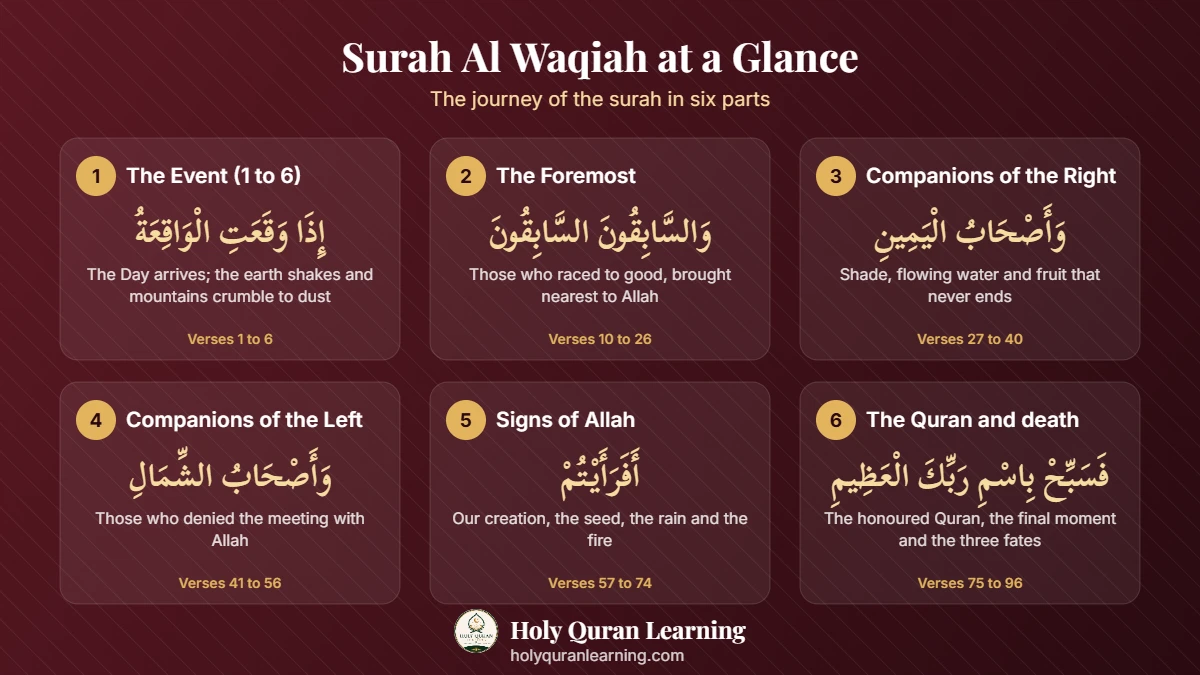
Surah Waqiah opens with the Day of Judgement arriving suddenly: the earth shakes and the mountains crumble to dust. Then it sorts all of humanity into three groups and describes the end of each, before turning to the signs of Allah in everyday life.
| Verses | Theme |
|---|---|
| 1 to 6 | The Inevitable Event arrives; the earth shakes and mountains turn to dust |
| 7 to 9 | Mankind is divided into three groups |
| 10 to 26 | As Sabiqun, the foremost, brought near to Allah in gardens of delight |
| 27 to 40 | Ashab al Yamin, the companions of the right, among shade and flowing water |
| 41 to 56 | Ashab al Shimal, the companions of the left, and the tree of Zaqqum |
| 57 to 74 | Signs of Allah: our creation, the seed, the water and the fire |
| 75 to 82 | The honour of the Quran, which “none touch except the purified” (56:79) |
| 83 to 96 | The moment of death and the fate of each group; “glorify the name of your Lord” |
The three groups of people
The foremost (as sabiqun) are those who raced to good deeds in this life; they are the closest to Allah. The companions of the right receive their book in their right hand and enter Paradise. The companions of the left are those who denied the meeting with Allah. Every reader is quietly asked: which group am I working towards?
Signs of Allah in creation
Verses 57 to 74 ask simple questions. Did you create the seed you plant? Did you send down the rain? Did you make the tree that gives you fire? Allah reminds us that the One who created us the first time can easily bring us back, and the passage ends: “So glorify the name of your Lord, the Most Great.”
Benefits of Surah Waqiah: What Is Authentic
Surah Waqiah is famous in Pakistan and India as “the surah for rizq.” Because so many people read it for that reason, it is important to know what the hadith scholars actually said.
Scholars allow acting on weak narrations about virtues as long as they are not severely weak and you do not believe them with certainty. So reading Surah Waqiah at night hoping for barakah is fine. What is not fine is promising people guaranteed wealth, or treating the surah like a charm while ignoring prayer and honest work.
Surah Waqiah for Rizq: The Right Approach
If you read Surah Waqiah for rizq, combine it with the means Allah Himself promised in the Quran:
- Taqwa and trust. “Whoever fears Allah, He will make a way out for him and provide for him from where he does not expect” (Quran 65:2 to 3).
- Istighfar. Nuh told his people that seeking forgiveness brings rain, wealth and children (Quran 71:10 to 12).
- Gratitude. “If you are grateful, I will surely increase you” (Quran 14:7).
- Effort. Take every lawful means, then leave the result to Allah.
Reflecting on verses 63 to 73, where Allah asks who makes the crops grow and who sends the rain, is itself the best lesson about rizq in this surah: provision is in Allah’s hand alone.
Best Time to Recite Surah Waqiah
There is no authentic hadith fixing a time for Surah Waqiah. Popular choices are after Isha or before sleeping, following the report that Ibn Mas’ud taught his daughters to read it every night, and after Maghrib. Choose a time you can keep every day. Many families read Surah Waqiah and Surah Mulk together at night, which takes about 25 minutes.
How to Memorize Surah Waqiah in 30 Days
Surah Waqiah has short, rhythmic verses with repeating endings, so it is one of the easier long surahs to memorise. This plan needs about 15 minutes a day.
- Days 1 to 10: Ruku 1, verses 1 to 38. About four short verses a day.
- Days 11 to 20: Ruku 2, verses 39 to 74. Three or four verses a day.
- Days 21 to 28: Ruku 3, verses 75 to 96. Three verses a day.
- Days 29 and 30: Recite the whole surah from memory twice a day and fix weak spots.
- Every day: Listen to the audio three times, then recite to someone who can correct you.
For more techniques, see our guide on how to memorize the Quran fast and our plan to memorize Surah Mulk, Yaseen and Ar Rahman at home.
Tajweed Notes for Surah Waqiah
- Verse endings. Most verses end in -un, -in or -ah. Stretch the madd at the end for two, four or six counts consistently.
- Ghunnah. Hold the nasal sound on every shaddah on noon and meem, such as إِنَّا and ثُمَّ.
- Qalqalah. Bounce the qaf with sukoon in words like خَلَقْنَاكُمْ (56:57).
- Heavy letters. Keep ق and ط full and deep, and ك and ت light.
New to these terms? Start with our Tajweed rules with simple examples.
Want to recite Surah Waqiah beautifully? Our qualified teachers offer one to one online Quran classes for adults and Quran classes for kids, including Tajweed and Hifz, with a free trial lesson.
Surah Waqiah: Frequently Asked Questions
Surah Waqiah is in which para?
Surah Waqiah is in Para 27 (Juz 27), called Qala Fama Khatbukum. It is the 56th surah, between Surah Ar Rahman and Surah Al Hadid.
How many verses and rukus are in Surah Waqiah?
Surah Al Waqiah has 96 verses and 3 rukus: verses 1 to 38, 39 to 74 and 75 to 96.
Is Surah Waqiah Makki or Madani?
It is a Makki surah, revealed in Makkah before the Hijrah. Its focus on the Day of Judgement and the signs of Allah is typical of Makki surahs.
Is the hadith about Surah Waqiah and poverty authentic?
The narration “whoever recites Surah Al Waqiah every night will never be afflicted by poverty” is reported by al Bayhaqi in Shu’ab al Iman. Most hadith scholars, including Imam Ahmad, Abu Hatim, ad Daraqutni and al Albani, graded it weak, while some Hanafi scholars considered one chain acceptable. You may recite it hoping for barakah, but do not treat it as a guarantee of wealth.
When is the best time to read Surah Waqiah?
There is no fixed Sunnah time. Many Muslims read it after Isha or before sleeping, following the practice of Abdullah ibn Mas’ud’s family, and others read it after Maghrib. Consistency matters more than the exact time.
How long does it take to read Surah Waqiah?
Most people read Surah Waqiah in 12 to 18 minutes at a normal pace. A slow, tartil recitation takes around 20 minutes.
Can I read Surah Waqiah from my phone?
Yes. Reading from a phone, this page or the PDF is allowed. Many scholars recommend having wudu when touching a printed mushaf, and it is always better to read with wudu.
What does Al Waqiah mean?
Al Waqiah means “the Inevitable Event”, one of the names of the Day of Judgement. The surah takes its name from its first verse.
Sources: Quran 56 · Tirmidhi 3297 · Tirmidhi 2910 · Islamweb fatwa 84157 · Quran 65:2 to 3 · Quran 71:10 to 12
More Surahs to Read, Listen to and Download
Looking for daily duas too? Read Safar Ki Dua, Nazar Ki Dua and the 99 Names of Allah, or browse all Quran surahs.